New Delhi, July 31, 2025 — Congress leader and Leader of Opposition in the Lok Sabha, Rahul Gandhi, has ignited a firestorm of controversy by endorsing U.S. President Donald Trump’s provocative claim that India’s economy is “dead.” Speaking to reporters outside Parliament on Thursday, Gandhi not only agreed with Trump’s assessment but also used the opportunity to launch a scathing attack on the Modi government, alleging that the Bharatiya Janata Party (BJP) has “destroyed” India’s economic, defense, and foreign policies to benefit industrialist Gautam Adani. The remarks have drawn sharp criticism, with many labeling Gandhi’s stance as unpatriotic and a betrayal of national interests.
Trump’s Controversial Statement
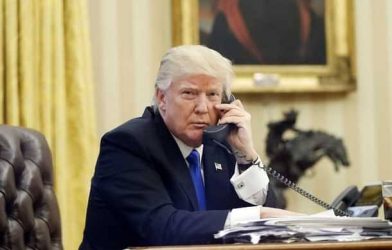
The controversy stems from a post by President Trump on Truth Social, where he described both India and Russia as having “dead economies.” Trump’s remarks came in the context of his announcement of a 25% tariff on Indian imports, citing India’s high tariffs on U.S. goods and its trade ties with Russia, particularly its purchase of Russian oil. “I don’t care what India does with Russia. They can take their dead economies down together, for all I care,” Trump wrote, adding that the U.S. conducts “very little business with India” due to its high tariffs.
Trump’s comments were part of a broader critique of India’s trade policies and its relationship with Russia, reflecting his protectionist stance as he escalates trade tensions with multiple countries, including allies like India and South Korea. The tariffs, announced on July 30, 2025, are expected to impact key Indian sectors such as automobiles, pharmaceuticals, and agriculture, prompting concerns about economic fallout.
Rahul Gandhi’s Response
Instead of condemning Trump’s derogatory remarks, Rahul Gandhi appeared to embrace them, stating, “Yes, he is right. Everybody knows this except the Prime Minister and the Finance Minister. Everybody knows that the Indian economy is a dead economy. I am glad that President Trump has stated a fact.” Gandhi went further, alleging that the BJP-led government has “finished the economy to help Adani.”
In a post on X, Gandhi elaborated on his critique, listing five reasons for the economy’s alleged demise: the “Adani-Modi partnership,” demonetization, a flawed GST, the failure of the “Assemble in India” initiative, the destruction of MSMEs, and the plight of farmers. He claimed, “Modi has destroyed the future of India’s youth because there are no jobs.”
Gandhi also criticized the government’s foreign and defense policies, accusing Prime Minister Narendra Modi of lacking the courage to challenge Trump’s claims, including his assertions of mediating a ceasefire between India and Pakistan during India’s Operation Sindoor. Gandhi dared Modi to call Trump a “liar” in Parliament, referencing former Prime Minister Indira Gandhi’s resolve as a benchmark.
Backlash and Accusations of Betrayal
Gandhi’s endorsement of Trump’s remarks has sparked widespread outrage, with critics accusing him of undermining India’s global standing for political gain. BJP leaders and supporters have labeled his comments as “anti-national” and “shameful,” arguing that aligning with a foreign leader’s insult to India crosses the line from legitimate criticism to betrayal. BJP IT cell head Amit Malviya, responding to Gandhi’s earlier comments on Trump’s claims about Operation Sindoor, accused him of harboring a “traitor’s mindset” and questioned his allegiance to India.
On social media, hashtags like #RahulBetraysIndia and #ShameOnRahul trended as netizens expressed their anger. One user wrote, “Criticizing the government is your right, but endorsing a foreign leader’s mockery of our economy? That’s a new low, even for Rahul Gandhi.” Another commented, “When Trump insults India, Rahul Gandhi nods in agreement. This is not opposition; this is disloyalty.”
Political analysts have also weighed in, noting that Gandhi’s remarks risk alienating voters who view his alignment with Trump as unpatriotic. “Rahul Gandhi’s strategy of using Trump’s statement to attack the government may backfire,” said political commentator Arjun Sharma. “While economic criticism is fair, endorsing a foreign leader’s negative portrayal of India could be seen as crossing a red line.”
Economic Context: Is India’s Economy Truly “Dead”?
Gandhi’s claim that India’s economy is “dead” contrasts with official data and global perceptions. According to the International Monetary Fund (IMF), India remains one of the fastest-growing major economies, with a projected GDP growth rate of 6.8% for 2025, despite global trade uncertainties. However, challenges such as unemployment, rural distress, and the impact of global tariffs cannot be ignored. The recent imposition of U.S. tariffs has raised concerns, with Congress leader Supriya Shrinate noting that Rahul Gandhi had previously warned about their potential to “devastate” key sectors.
Critics of Gandhi argue that his rhetoric exaggerates the situation, ignoring India’s resilience and growth potential. The Economic Times reported that while Trump’s tariffs pose challenges, India’s economy is “relatively more domestically oriented” and less reliant on trade compared to other regional economies, which may cushion the impact.
Congress’s Broader Offensive
Gandhi’s remarks are part of a broader Congress strategy to corner the Modi government during the Monsoon Session of Parliament. The party has submitted an adjournment motion to discuss the implications of Trump’s tariffs, demanding a debate on their economic and trade ramifications. Congress leaders like Jairam Ramesh and P. Chidambaram have also criticized Modi’s silence on Trump’s claims, particularly regarding Operation Sindoor, where Trump alleged that “five jets were shot down” and that he mediated a ceasefire. The Ministry of External Affairs has denied these claims, stating no such mediation occurred.
Congress has further accused Modi of compromising national honor by not responding forcefully to Trump’s assertions, with Gandhi sarcastically remarking that Modi lacks the “guts” to challenge the U.S. President.
Government’s Response
The Modi government has so far maintained a measured stance. External Affairs Minister S. Jaishankar, addressing the Lok Sabha, clarified that no telephonic conversation occurred between Modi and Trump regarding the alleged ceasefire, refuting Trump’s claims. The government has also emphasized ongoing trade negotiations with the U.S. to mitigate the impact of the tariffs, with top officials working to finalize a trade agreement.
Finance Minister Nirmala Sitharaman, responding to opposition criticism, defended the government’s economic record, citing infrastructure development, digital growth, and foreign direct investment as evidence of a robust economy. “India is not a dead economy but a dynamic one, navigating global challenges with resilience,” she said in a statement.
The Road Ahead
The controversy has intensified the political divide in India, with the BJP accusing Congress of playing into the hands of foreign narratives to score domestic points. As trade talks with the U.S. continue, the government faces the dual challenge of addressing economic concerns and countering opposition attacks. For Rahul Gandhi and the Congress, the strategy of leveraging Trump’s remarks may amplify their critique of the BJP but risks alienating voters who prioritize national pride.
As the debate rages on, the question remains: Can constructive criticism of the government coexist with defending India’s image on the global stage? For now, Rahul Gandhi’s alignment with Trump’s provocative statement has left many Indians questioning where the line between opposition and disloyalty lies.
Disclaimer: The views expressed in this article are based on current events and public reactions as of July 31, 2025. Readers are encouraged to verify information from multiple sources.